Your Skin Has a Constitution: An Ayurvedic Guide to Reading Your Complexion and Building a Ritual That Truly Works
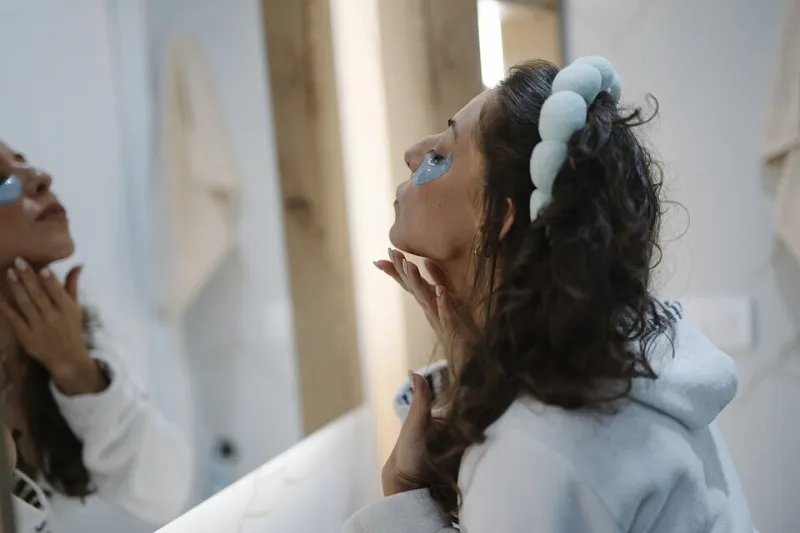
Photo: Shixart1985, CC BY 2.0, via Wikimedia Commons
Walk down the skincare aisle of any American pharmacy or scroll through the beauty section of a major retailer, and you will encounter an overwhelming array of products organized around a surprisingly limited vocabulary: oily, dry, combination, sensitive, normal. These categories have anchored Western skincare marketing for generations, yet the evidence that they translate into lasting skin health is, at best, mixed. Dermatologists' offices across the country see the same patients cycling through prescription retinoids, salicylic acid cleansers, and hydrating serums — sometimes for years — without resolving the root issue.
Ayurveda, the classical Indian system of medicine that has guided health and beauty practices for more than five millennia, offers a fundamentally different starting point. Rather than categorizing skin by its current surface behavior, Ayurveda asks a more penetrating question: what is the underlying constitutional nature of this individual, and how is that nature expressing itself through the skin? The answer lies in the concept of Prakruti — your unique, lifelong biological constitution — and the three doshas that compose it.
What Prakruti Actually Means for Your Skin
Prakruti, derived from the Sanskrit for "nature" or "original form," describes the precise ratio of Vata, Pitta, and Kapha energies present in your physiology at birth. Unlike the Western notion of skin type, which can shift with the seasons, your hormonal cycle, or a new cleanser, Prakruti is considered stable across your lifetime. It is your biological baseline.
This matters enormously for skincare because it means that many of the fluctuations American consumers attempt to correct with topical products — a sudden breakout before a stressful week, winter dryness that no moisturizer seems to resolve, the persistent redness that flares after a spicy meal — are not random. They are intelligible signals of dosha imbalance, readable against the backdrop of your constitutional nature.
Understanding whether your skin is primarily Vata, Pitta, or Kapha in constitution — or a combination — transforms skincare from a reactive, trial-and-error process into a coherent, preventive practice.
Vata Skin: The Delicate and the Drifting
Vata is governed by the elements of air and space. Its qualities are dry, light, cool, rough, and mobile. Vata skin tends to be fine-pored, thin, and naturally luminous in youth, but it is also the constitution most vulnerable to premature aging, chronic dehydration, and a papery, crepe-like texture when Vata becomes aggravated.
Common Vata skin concerns include: flakiness that returns regardless of moisturizer applied, a tendency toward fine lines appearing earlier than expected, cracked lips and heels, and a general dullness that worsens in cold, dry climates — something particularly relevant for Americans living in the northern states or spending winters in heavily air-conditioned or heated environments.
The conventional dermatological response to these symptoms is typically a heavier moisturizer or a hyaluronic acid serum. Ayurveda agrees that hydration is essential, but goes further: Vata skin requires oil-based nourishment, not merely water-binding humectants. Traditionally, sesame oil, almond oil, and ghee-infused preparations have been used to deeply replenish the lipid barrier that Vata skin perpetually struggles to maintain. Ingredients such as shatavari and ashwagandha, taken internally, support the tissues at a systemic level that topical products cannot reach.
Vata skin also responds profoundly to warmth and routine. Erratic schedules, excessive screen exposure, and emotional stress all aggravate Vata, and this aggravation will manifest in the skin before almost anywhere else in the body.
Pitta Skin: The Reactive and the Radiant
Pitta is governed by fire and water. Its qualities are hot, sharp, light, oily, and spreading. Pitta skin is typically medium in thickness, with a warm, rosy, or golden tone that can appear strikingly luminous. However, it is also the constitution most prone to inflammation, sensitivity, and the kind of breakouts that dermatologists frequently diagnose as rosacea, hormonal acne, or contact dermatitis.
Pitta skin flares predictably in response to heat — whether from spicy food, intense exercise, sun exposure, or emotional frustration. Many Americans with Pitta constitutions have spent years searching for the cause of their reactive skin, cycling through elimination diets and fragrance-free product lines, without recognizing that the pattern itself is the diagnostic clue.
Ayurvedic tradition addresses Pitta skin through the principle of cooling and anti-inflammatory care, both topically and internally. Rose water — one of the most celebrated Ayurvedic beauty ingredients — is a particularly well-suited toner for Pitta complexions, offering gentle astringency alongside a notable cooling action. Neem, with its antimicrobial and anti-inflammatory properties, has been used for centuries to address the bacterial component of Pitta breakouts without the harshness of benzoyl peroxide or sulfur-based Western treatments.
Internally, Pitta skin benefits from bitter and astringent foods, adequate hydration, and the reduction of fermented, fried, and excessively spicy foods that stoke digestive fire and, in turn, heat the skin from within. Aloe vera — applied topically and consumed as a juice — is another traditional remedy with particular affinity for Pitta skin conditions.
Kapha Skin: The Resilient and the Congested
Kapha is governed by earth and water. Its qualities are heavy, oily, cool, smooth, and stable. Kapha skin is often the envy of other constitutions in youth: thick, well-hydrated, slow to wrinkle, and naturally supple. The challenge emerges when Kapha becomes excessive — a situation that produces enlarged pores, blackheads, a persistent oily sheen, and the kind of cystic congestion that over-the-counter acne products rarely resolve satisfactorily.
Americans with Kapha-dominant skin often find that their skin worsens with rich, heavy moisturizers and improves with more stimulating, light-touch approaches. Ayurveda has long understood this: Kapha skin requires movement, stimulation, and the reduction of heaviness — both in topical products and in diet.
Ubtan — a traditional Ayurvedic exfoliating paste made from chickpea flour, turmeric, and various herbal powders — is an excellent foundational treatment for Kapha skin. It lifts congestion, stimulates circulation, and removes the accumulation of dead cells that contribute to dullness and breakouts. Kaolin clay masks, dry brushing before bathing, and the use of lighter carrier oils such as jojoba or grapeseed are all well-aligned with Kapha's need for refinement rather than richness.
Dietarily, Kapha skin improves with the reduction of dairy, heavy grains, and excessive sweet foods — all of which increase Kapha internally and express themselves through the skin as increased sebum production and congestion.
Why Conventional Skincare Often Falls Short
The fundamental limitation of the Western skincare paradigm is its focus on the skin as an isolated organ rather than as a reflection of whole-body physiology. Ayurveda has always understood the skin as a mirror — of digestive health, emotional state, seasonal influence, and constitutional balance. A breakout is not merely a bacterial event on the surface; it is a signal from the interior.
This perspective does not invalidate dermatological science. It complements it by offering a framework for understanding why the same treatment works brilliantly for one person and fails entirely for another. Constitution-based skincare does not promise perfection; it promises relevance — a practice calibrated to the body you actually inhabit.
For American consumers weary of the product treadmill, Ayurvedic Prakruti analysis offers something genuinely rare: a way to stop chasing trends and start building a skincare ritual grounded in self-knowledge. That, ultimately, is the most enduring beauty practice of all.