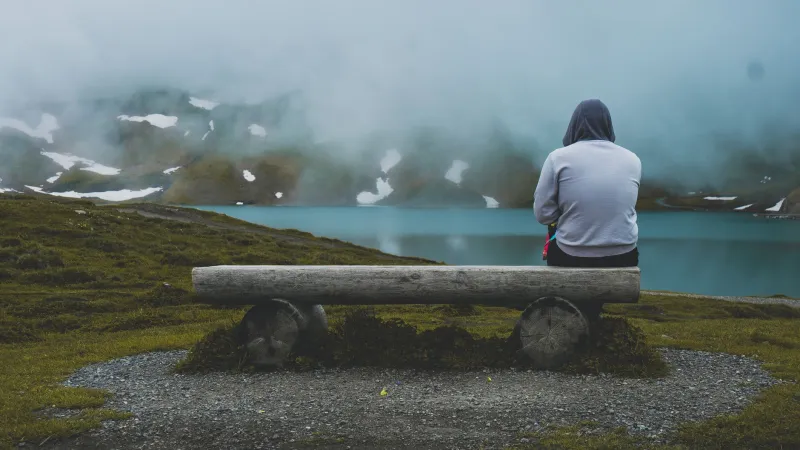
Witnessed Wellness Is Weakened Wellness: The Ayurvedic Argument for Healing in Private
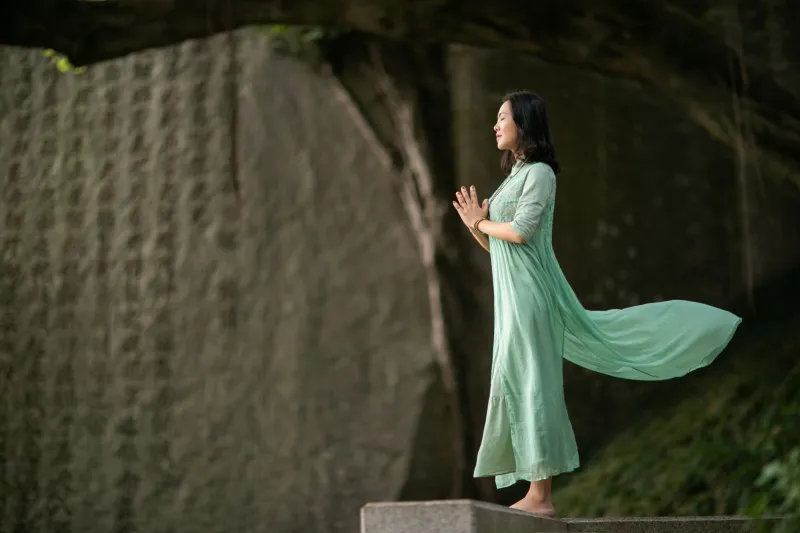
There is a particular kind of morning that many Americans recognize: the alarm sounds before sunrise, a yoga mat is unrolled with genuine intention, a nourishing breakfast is prepared with care—and then, almost reflexively, a phone is lifted. The photograph is taken. The caption is composed. The post goes live. And somewhere in that sequence, something essential quietly slips away.
This is not a moral judgment about social media use. It is, rather, an invitation to examine what Ayurvedic philosophy has understood for millennia: that the quality of our attention during a healing practice is inseparable from the healing itself. When attention is divided—when one eye is turned inward and the other is already composing a caption for an audience—the energetic architecture of genuine restoration begins to collapse.
The Senses as Sacred Instruments
In Ayurveda, the five senses—known collectively as the jnanendriyas—are not passive receivers of information. They are active instruments of consciousness, each one drawing prana, or vital life force, in a specific direction. Sight, sound, taste, touch, and smell each carry the capacity to nourish or deplete, depending entirely on the quality and object of their engagement.
When a person sits in meditation and simultaneously wonders how the moment will appear on Instagram, the sense of sight is no longer turned inward. It is already projecting outward, anticipating an external audience. The pratyahara that classical Ayurveda and its sister science, yoga, describe as withdrawal of the senses—a foundational condition for genuine healing—becomes impossible to achieve. The nervous system, rather than settling into parasympathetic ease, remains in a low-grade state of performance readiness.
This distinction matters enormously. The parasympathetic state—what Western medicine calls "rest and digest"—is the precise physiological terrain in which Ayurvedic healing practices do their deepest work. Digestion improves, cortisol recedes, cellular repair accelerates, and the mind becomes receptive to the kind of subtle recalibration that no supplement or protocol can manufacture. Documentation, by its very nature, interrupts this state before it fully arrives.
Sankalpa and the Energetics of Intention
Ayurvedic tradition places extraordinary emphasis on sankalpa—the pure intention with which any action is undertaken. A healing ritual performed with undivided sankalpa carries a fundamentally different energetic signature than the same ritual performed with an eye toward external validation. The difference is not merely psychological; it is, according to classical understanding, measurable in the quality of ojas the practice generates.
Ojas is the refined essence of all seven bodily tissues, the substance that Ayurveda associates with immunity, vitality, and what might be called radiant health. Its cultivation depends heavily on the coherence of one's attention and the purity of one's intention. Fragmented attention—attention split between the present moment and an imagined audience—produces fragmented ojas. The practice may be executed perfectly in its external form, but its internal yield is diminished.
Consider the difference between preparing a meal with herbs chosen for their specific doshic properties, tasting each ingredient with full sensory presence, and eating in quiet gratitude—versus preparing the same meal while arranging each element for optimal visual composition, photographing it from three angles, and eating while monitoring the post's engagement. The nutritional content is identical. The Ayurvedic outcome is not.
The Hidden Cost of External Validation
American wellness culture has developed a peculiar paradox: the very practices meant to reduce stress have become sources of social performance anxiety. The meditation app streak must be maintained. The morning routine must be aesthetically coherent. The green smoothie must be photographed in natural light. What began as personal healing has been colonized by the logic of content creation.
Ayurveda would identify this pattern as a rajas imbalance—an excess of the quality of agitation, ambition, and outward-seeking energy. Rajas is not inherently harmful; it is the force that motivates action and engagement with the world. But when rajas infiltrates spaces that require sattva—the quality of clarity, stillness, and receptive intelligence—it becomes an obstacle to genuine healing.
The pursuit of external validation, however mild or well-intentioned, is fundamentally rajasic. It asks the nervous system to remain alert to how it is perceived. It keeps the ego engaged in a process that heals most effectively when the ego steps aside. Every notification received during a restorative practice is a small rajasic interruption—a reminder to the body that it is being watched, assessed, and evaluated.
Privacy as a Healing Condition
The great Ayurvedic physicians of antiquity—Charaka, Sushruta, Vagbhata—did not write extensively about privacy because it required no defense. The idea that one's healing practices would be performed for an audience would have been, to them, a category error as fundamental as attempting to sleep while running.
Yet the insight embedded in their teachings is directly applicable to the contemporary American context. Charaka's Charaka Samhita repeatedly emphasizes the importance of ekanta—solitude or aloneness—as a condition favorable to mental clarity and physical restoration. The recommendation is not ascetic isolation but rather the deliberate creation of an interior space uncontaminated by social performance.
This is precisely what the wellness selfie forecloses. Not because photographs are inherently harmful, but because the anticipation of documentation changes the nature of the experience before the experience even begins. The moment you plan to photograph your morning practice, that practice is no longer entirely yours. It has been partially donated to an audience, and that donation has a cost.
Reclaiming the Unwitnessed Ritual
None of this demands a dramatic renunciation of social media or a rigid prohibition on sharing one's wellness journey. Ayurveda is, above all, a tradition of balance and contextual discernment. The question is not whether to share, but when and with what intention.
A useful reorientation might be this: allow the practice to be complete before documentation is considered. Sit with the stillness after meditation before reaching for the phone. Taste the meal fully before arranging it for a photograph. Let the walk in nature end before composing the caption about it. This simple sequence—experience first, documentation second—preserves the integrity of the healing moment and prevents the parasympathetic state from being prematurely interrupted.
More radically, consider designating certain practices as permanently private. Not every healing ritual needs a witness. Not every act of self-care requires social corroboration to be real or meaningful. In fact, Ayurvedic wisdom would suggest that the practices you never share may become the most potent ones—precisely because they belong entirely to you, undiluted by the energetic demands of an audience.
The ancient rishis who developed these healing systems practiced in forests, in caves, in the unwitnessed quiet of early mornings. They were not building personal brands. They were building health. There is a lesson in that distinction that modern American wellness culture is only beginning, perhaps reluctantly, to receive.