The Healing Spice Rack: How Everyday Pantry Staples Become Ayurvedic Preventative Medicine
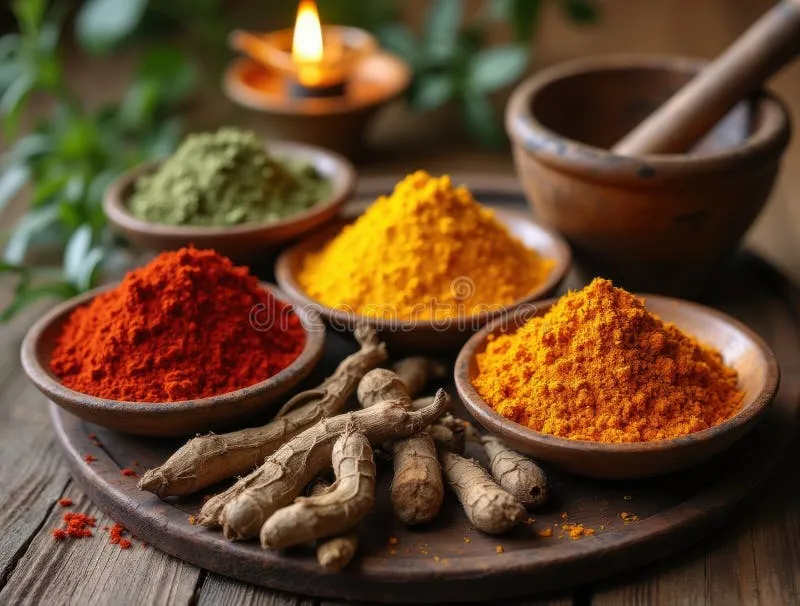
Photo: colorful Ayurvedic spices in small bowls on wooden kitchen counter with mortar and pestle, via thumbs.dreamstime.com
Walking the spice aisle of any mainstream American grocery store—whether a Kroger in suburban Ohio or a Whole Foods in downtown Seattle—you will find, with very little searching, the foundational ingredients of an Ayurvedic medicinal kitchen. Turmeric, cumin, coriander, ginger, cinnamon, fennel, black pepper: these are not exotic imports requiring a specialty health food store. They are accessible, affordable, and, according to a medical tradition more than three thousand years old, profoundly therapeutic.
Ayurveda does not draw a sharp line between food and medicine. In the classical texts, this concept is expressed through the principle of Ahara—nourishment as the first and most fundamental form of healing. Spices occupy a privileged position within Ahara because they act simultaneously on digestion, tissue metabolism, and the subtle energetic channels known as srotas. They are not supplements. They are not treatments. They are, when used consistently and with understanding, a daily practice of prevention.
Understanding Spices Through the Ayurvedic Lens
Before reaching for a particular spice, it is useful to understand how Ayurveda categorizes their effects. Every herb and spice possesses a rasa (taste), a virya (energetic quality—heating or cooling), and a vipaka (post-digestive effect). These three properties determine how a spice interacts with the three doshas—Vata, Pitta, and Kapha—and therefore which individuals and conditions it most benefits.
This framework transforms the spice cabinet from a collection of flavoring agents into a personalized toolkit for maintaining balance across all seasons and life stages.
The Core Five: What Every American Pantry Should Contain
Turmeric (Curcuma longa)
No single spice bridges Ayurvedic tradition and modern nutritional science more visibly than turmeric. Its active constituent, curcumin, has been the subject of thousands of peer-reviewed studies examining its anti-inflammatory, antioxidant, and metabolic properties. In Ayurveda, however, turmeric's significance predates any molecular analysis. It is classified as a tridoshic spice—meaning it is generally balancing for all three constitutional types—with particular affinity for purifying the blood, supporting liver function, and reducing ama (the toxic metabolic residue that Ayurveda identifies as the precursor to chronic disease).
Dosha notes: Beneficial for all types; Pitta-dominant individuals should use in moderation due to its mildly heating virya. Pair always with black pepper and a fat source (such as ghee or olive oil) to maximize absorption.
Simple application: Add one-half teaspoon to scrambled eggs or sautéed vegetables each morning. Over time, this single habit provides meaningful anti-inflammatory support without any supplementation.
Cumin (Cuminum cyminum)
Cumin is perhaps Ayurveda's most essential digestive spice. It kindles Agni—the digestive fire—without excessively aggravating Pitta, making it one of the safest and most broadly applicable spices in the classical pharmacopeia. It is particularly effective at reducing gas, bloating, and the sluggishness associated with Kapha imbalance and metabolic stagnation.
Dosha notes: Excellent for Vata and Kapha; use moderately for Pitta. Whole seeds, briefly toasted in a dry pan before grinding, release significantly more therapeutic volatile oils than pre-ground powder.
Simple application: Bloom one teaspoon of whole cumin seeds in warm ghee or olive oil at the start of any sauté. This technique, called tadka in Indian culinary tradition, is one of the most direct ways to deliver cumin's medicinal properties into a meal.
Coriander (Coriandrum sativum)
Where cumin heats, coriander cools. This cooling, mildly sweet spice is one of Ayurveda's primary tools for managing Pitta-related conditions: inflammatory skin issues, acid reflux, irritability, and the kind of intense, driven burnout that is increasingly common among high-achieving Americans. Coriander supports the kidneys, soothes the urinary tract, and gently promotes detoxification without depleting the system.
Dosha notes: Primarily pacifying for Pitta; also beneficial for Vata when combined with warming spices. Kapha types may use it freely.
Simple application: Brew a simple digestive tea by steeping one teaspoon each of whole cumin, coriander, and fennel seeds in two cups of hot water for ten minutes. This CCF tea is one of Ayurveda's most widely recommended home remedies for digestive imbalance, seasonal transitions, and general detoxification support.
Ginger (Zingiber officinale)
Fresh and dried ginger occupy slightly different therapeutic roles in Ayurveda. Fresh ginger is considered more Vata-pacifying and is best used to stimulate digestion before meals. Dried ginger (known as sunthi) is more intensely heating, better suited to Kapha-related conditions such as congestion, sluggish metabolism, and cold-damp seasonal illness—the kind that settles in during American winters and lingers into spring.
Dosha notes: Warming for Vata and Kapha; use sparingly in Pitta constitutions, particularly during summer months.
Simple application: Grate one teaspoon of fresh ginger into warm water with lemon and a small amount of raw honey before the first meal of the day. This preparation stimulates Agni, clears overnight accumulation of ama, and supports lymphatic circulation.
Cinnamon (Cinnamomum verum or C. cassia)
Cinnamon is one of the most metabolically significant spices in both Ayurvedic and contemporary nutritional literature. In Ayurveda, it is prized for its capacity to regulate blood sugar, improve peripheral circulation, and warm the digestive tract. For the many Americans managing pre-diabetic conditions or insulin resistance, cinnamon represents a gentle, food-based tool for metabolic support that complements—though does not replace—medical guidance.
Dosha notes: Warming and stimulating; most beneficial for Vata and Kapha. Use cautiously in excess for Pitta individuals.
Simple application: Add one-quarter teaspoon of true Ceylon cinnamon (preferred over Cassia in Ayurvedic practice for its milder potency) to oatmeal, smoothies, or morning grain porridges.
Storage, Freshness, and the Principle of Potency
Ayurveda places significant emphasis on the quality and freshness of medicinal substances. A spice that has sat in a cabinet for three years, exposed to light and heat, has lost much of its therapeutic value regardless of its label. As a general guideline:
- Whole seeds and dried roots retain potency for up to two years when stored in airtight glass containers away from direct light and heat.
- Ground powders begin losing volatile oils within six to twelve months of grinding. Purchasing whole spices and grinding them as needed—using a simple electric spice grinder—dramatically increases both flavor and therapeutic effect.
- Spice blends should be prepared in small quantities and used within three months.
The modest investment of a dedicated spice grinder and a set of glass storage jars transforms a passive pantry into an active, living pharmacy.
A Note on Dosha-Specific Seasonal Adjustments
Ayurveda recognizes that the body's needs shift with the seasons, and the spice cabinet should shift accordingly. During the cold, dry months of winter and early spring—when Vata and Kapha are naturally elevated—warming spices such as ginger, cinnamon, and black pepper should be emphasized. During the intense heat of American summers, when Pitta is most vulnerable, cooling spices such as coriander, fennel, and mint take precedence.
This seasonal rotation is not complexity for its own sake. It is a practical expression of Ayurveda's most fundamental principle: that health is not a fixed destination but a continuous, dynamic relationship between the individual and their environment. The spice cabinet, tended with this understanding, becomes one of the most practical and grounded expressions of that relationship available in everyday American life.